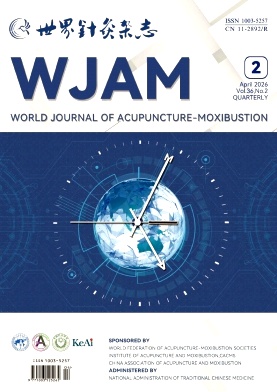
期刊简介
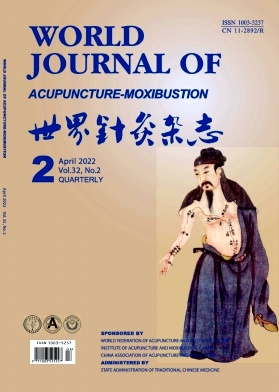
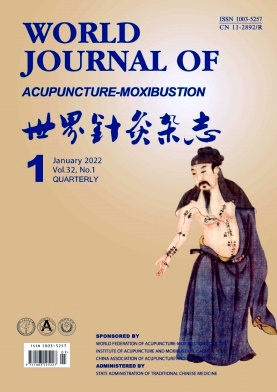
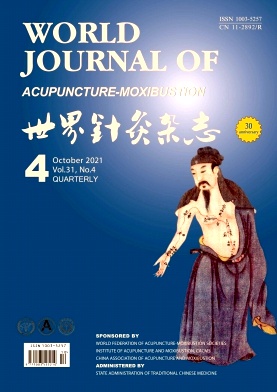
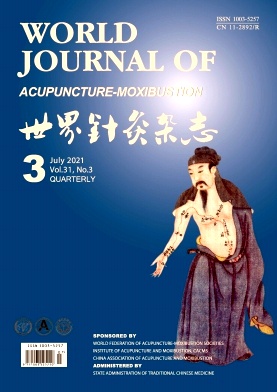
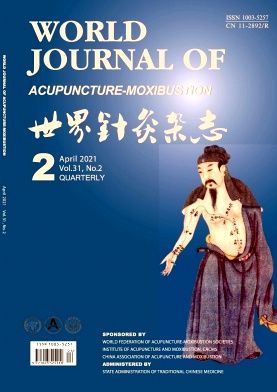
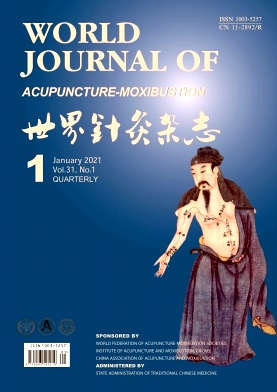
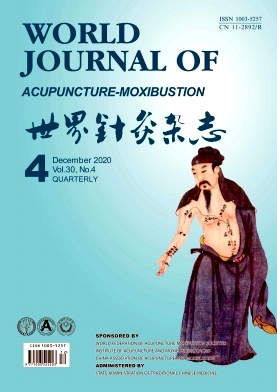
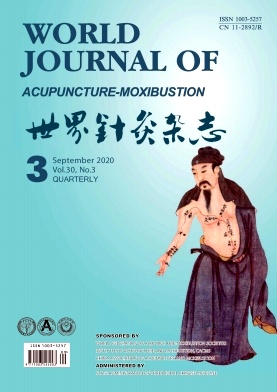
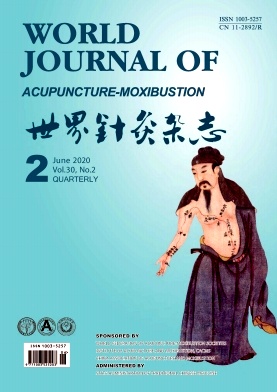
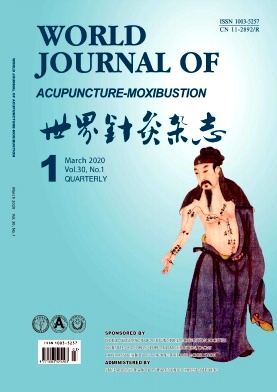
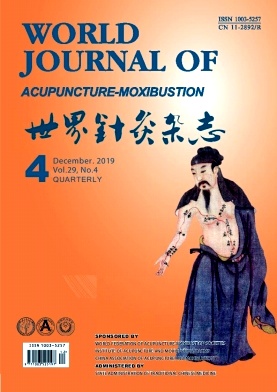
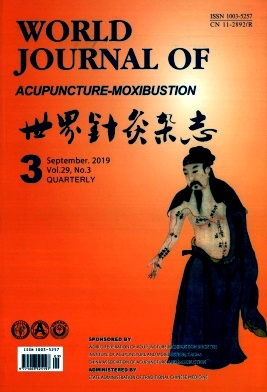
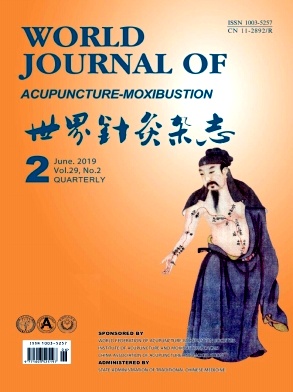
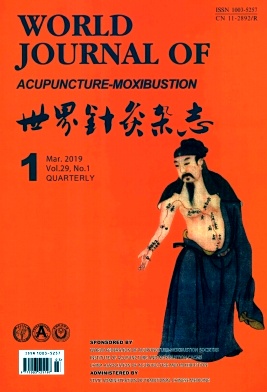
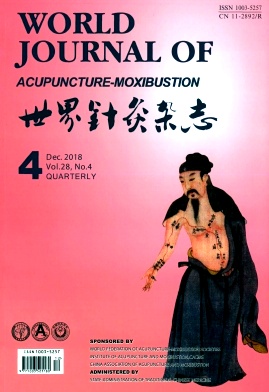
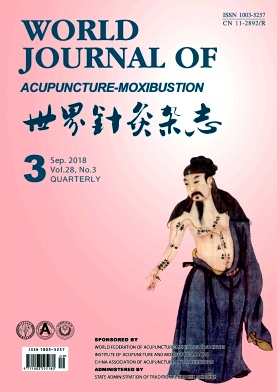
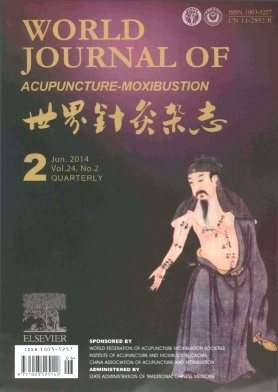
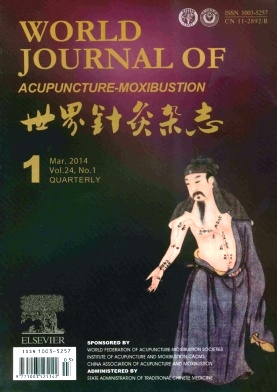
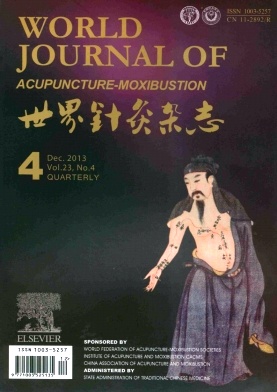
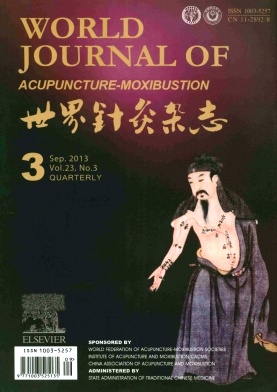
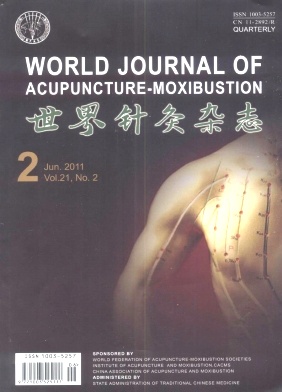
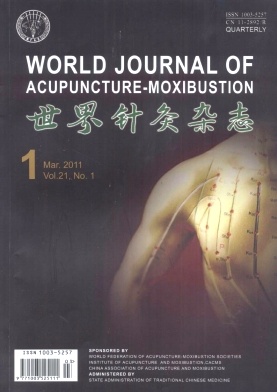
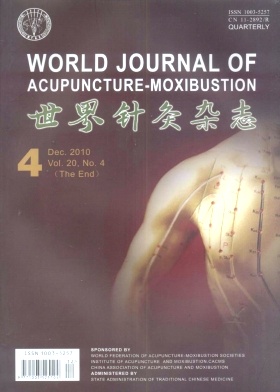
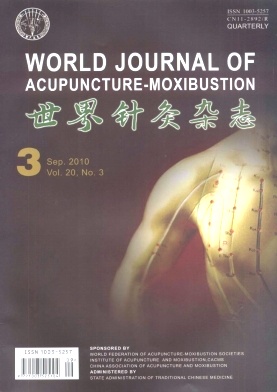
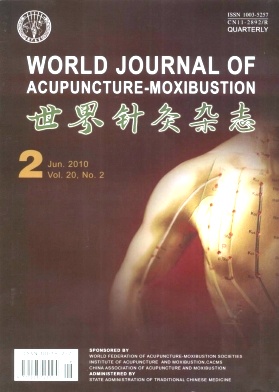
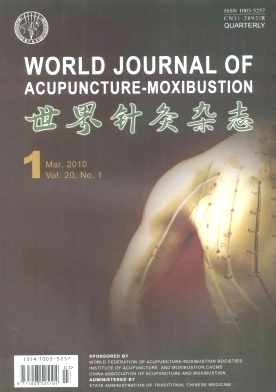
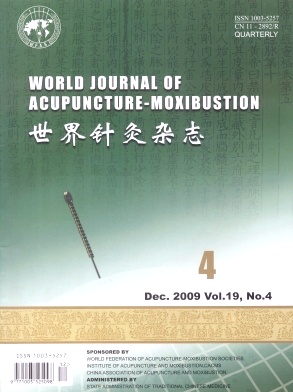
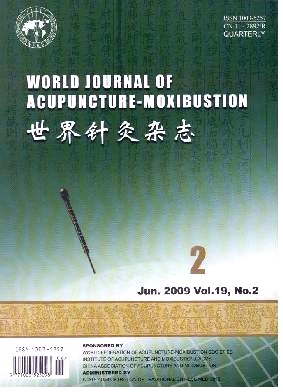
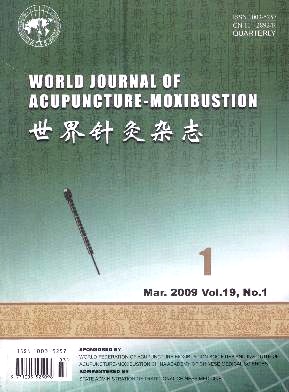
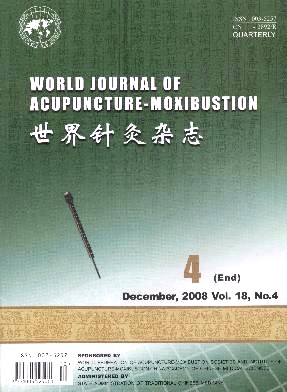
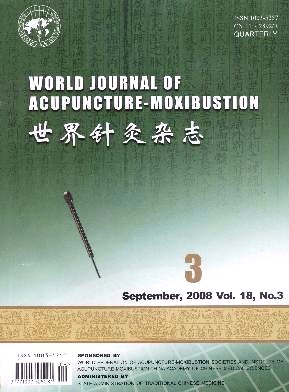
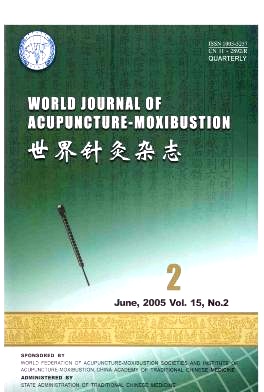
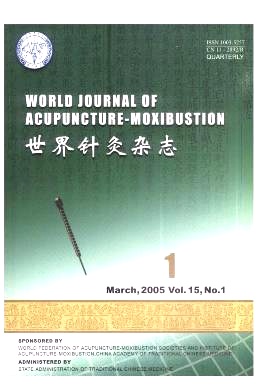
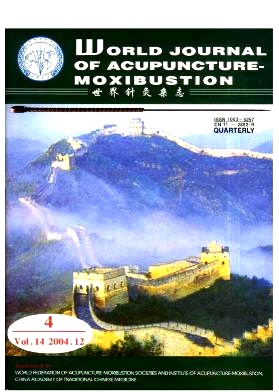
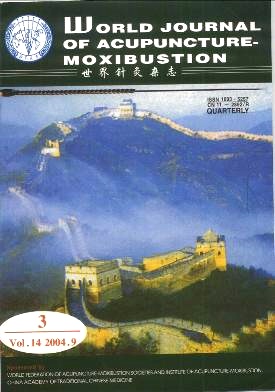
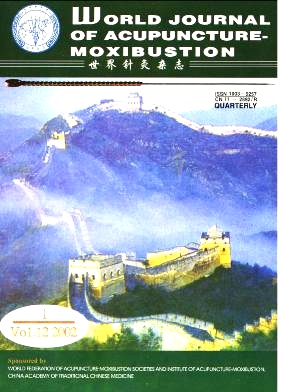
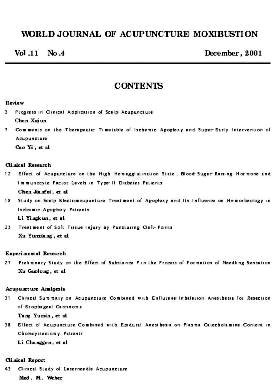
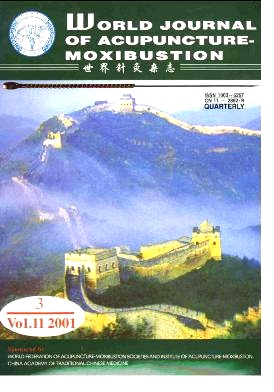
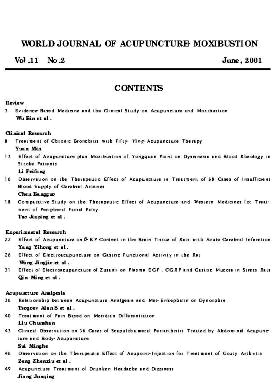
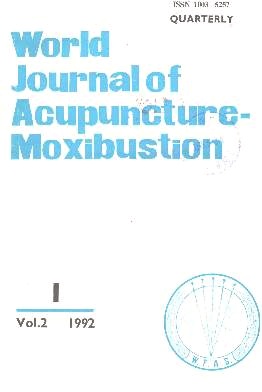
刊名 Full Journal title: World Journal of Acupuncture-Moxibustion
(世界针灸杂志)
主办 Sponsored by:世界针灸学会联合会 World Fedration of Acupu ncture-Moxibustion Socites ;中国中医科学院针灸研究所 Institute of A cupuncture and Moxibustion, China Academy of Chinese Medica l Sciences;中国针灸学会 China Association of Acupuncture and Moxib ustion
周期 Period: 季刊 Quarterly
出版地 Published in :北京市 Beijing ,China
语种 Language: 英文 English
开本 Format: 16开 16
ISSN: 1003-5257
CN: 11-2892/R
邮发代号 Post code: 82-170
创刊时间 First issue:1991
公告栏
《世界针灸杂志》(WJAM)公开招募青年编委
2023-12-21 置顶“循证针灸学”专栏征稿通知
2023-12-21 置顶【最新消息】 《世界针灸杂志(英文版)》被收录为“中国科技核心期刊”
2023-12-21《世界针灸杂志》被中国科学引文数据库收录WJAM has been included in the Chinese Science Citation Database
2023-12-21《世界针灸杂志》被ESCI数据库收录WJAM has been indexed by Emerging Sources Citation Index (ESCI)
more..多靶点协同与系统整合:针刺改善脑卒中后认知障碍的机制研究(英文)
Multi-target synergism and integration:Mechanism of acupuncture for post-stroke cognitive impairment
周明园;张东旭;齐鹏飞;蒋焕莹;焦雪峰;曹馨元;苏运川;孙忠人;尹洪娜; Ming-yuan ZHOU;Dong-xu ZHANG;Peng-fei QI;Huan-ying JIANG;Xue-feng JIAO;Xin-yuan CAO;Yun-chuan SU;Zhong-ren SUN;Hong-na YIN;脑卒中后认知障碍(PSCI)是脑卒中后常见的致残性并发症。针刺能有效改善PSCI患者学习记忆功能,提高患者的远期生活质量,其机制研究也逐步从现象观察深入到多层面的作用机理探索。本文总结近年来针刺干预PSCI起效机制的相关文献,发现针刺通过多靶点协同从而系统改善PSCI。针刺起效的机制主要是通过抑制神经炎症减轻脑内免疫损伤,并通过增强神经可塑性来促进突触与记忆环路重建,而调控自噬和维持神经血管单元稳定作为重要的辅助路径,可协同清除损伤产物、维护神经元微环境。此外,调节肠道菌群、影响表观遗传及改善脑代谢等新兴方向,从系统层面拓展机制认知。然而,现有研究多孤立阐述各机制,缺乏对内在关联的整合,也未能充分阐明不同针刺方法与其效应优势的对应关系。因此,本文整合分散的机制证据,强调未来需借助多组学等方法,深入探究机制间的协同关系,并加强针刺方案特异性与临床效应的关联研究,以推动基础机制向临床实践转化。
Post-stroke cognitive impairment(PSCI) is a common disabling complication after stroke.Acupuncture can effectively improve learning and memory function in patients with PSCI and enhance their quality of life in long term.Research on its effect mechanisms has evolved from phenomenological observation to multidimensional exploration progressively.In this paper,recent studies on effect mechanisms of acupuncture for PSCI were collected,which revealed that acupuncture can alleviate PSCI through multitarget synergism.The therapeutic mechanism of acupuncture primarily involves reducing immune damage in the brain by suppressing neuroinflammation,and promoting synaptic and memory circuit reconstruction through enhancing neural plasticity,egulating autophagy and maintaining the stability of neurovascular units as the critical auxiliary pathways,which can synergistically remove the damage products and preserve the neuronal microenvironment.Furthermore,emerging research directions such as modulating gut microbiota,influencing epigenetics,and improving brain metabolism expand the mechanistic understanding.However,existing studies predominantly isolate and describe individual mechanisms without integrating their intrinsic correlations,nor do they adequately elucidate the corresponding relationships between different acupuncture techniques and their therapeutic advantages.Therefore,this review integrates the fragmented mechanistic evidences,and emphasizes that future research need multiomics approaches,so as to explore the synergistic relationships among mechanisms,and to strengthen the correlative research between the specificity of acupuncture regimens and clinical effect,in order to facilitate bench-to-bedside translation.
艾灸治疗类风湿性关节炎:叙述性综述(英文)
Moxibustion therapy for rheumatoid arthritis:A narrative review
管伟胜;严海新;李尊元;胡卿茹;刘志丹; Wyesen KWAN;Hai-xin YAN;Zun-yuan LI;Qing-ru HU;Zhi-dan LIU;艾灸疗法在类风湿关节炎的综合治疗中占有重要的一席之地,在缓解关节及全身症状、调节免疫上具有独特作用,临床操作方便、无胃肠道反应;与西药联用还能起到减少西药用量、减毒增效的作用。为了系统地评估艾灸治疗类风湿性关节炎的价值,我们回顾了近25年来发表的193篇中外文献,发现艾灸疗法具有改善类风湿关节炎患者晨僵、关节疼痛、关节肿胀指数及整体生活质量,降低TNF-α、IL-1β等炎症因子的分泌,抑制滑膜血管新生与细胞增殖,减轻血管翳形成,缓解软骨及骨破坏,增加胶原蛋白与蛋白多糖含量等作用;其机制与抑制T细胞活化并纠正免疫细胞及分子失衡,通过滑膜组织PI3K/Akt/mTOR、HPA轴介导的NMDA-NO-cGMP等信号通路调控细胞自噬与凋亡,调节成骨细胞与破骨细胞分化、延缓软骨降解,抑制铁死亡有关。除了上述免疫及关节局部效应,我们还发现艾灸能通过昼夜节律振荡调节细胞因子水平、影响肠道菌群减轻全身炎症反应等关节外途径调控免疫、改善关节炎性病变。本综述更系统、更全面地阐述了艾灸治疗类风湿性关节炎的临床效应,并介绍了艾灸通过改善骨细胞分化、抑制铁死亡、调节肠道菌群、调节中枢分泌的化学物质治疗类风湿性关节炎的机制,进一步丰富和深化了对艾灸治疗类风湿性关节炎效应与机制的全面认知。同时也揭示了部分存在的问题,如治疗穴位的选择较为单一,不同穴位及其组合的临床功效还需研究,标准化治疗方案的制定需要进一步落实等。随着科技的进步和研究的深入,更多的临床效应和治疗机制将会进一步揭示。
Moxibustion occupies a significant position in the comprehensive management of rheumatoid arthritis(RA).Moxibustion demonstrates unique efficacy in ameliorating both local joint and systemic symptoms,as well as in immunomodulation.Clinically,it offers operational convenience and is devoid of gastrointestinal adverse effects.Furthermore,when employed as an adjunct to conventional western medicine,it facilitates dose reduction of pharmacological agents while enhancing therapeutic efficacy and mitigating toxicity.To systematically evaluate this domain,we reviewed 193 domestic and international publications spanning the past 25 years.Our analysis indicates that moxibustion yields significant clinical benefits,including the improvement of morning stiffness,joint pain,and joint swelling indices,alongside an enhancement in overall quality of life for RA patients.Mechanistically,moxibustion has been shown to downregulate the secretion of pro-inflammatory cytokines such as TNF-α and IL-1β;inhibit synovial angiogenesis and cellular proliferation;attenuate pannus formation;mitigate cartilage and bone destruction;and increase the content of collagen and proteoglycans.These therapeutic effects are mediated through multiple pathways:suppressing T cell activation and rectifying imbalances in immune cells and molecules;regulating autophagy and apoptosis via signaling cascades,including the PI3K/Akt/mTOR pathway in synovial tissue and the HPA axis-mediated NMDA-NO-cGMP pathway;modulating the differentiation of osteoblasts and osteoclasts to delay cartilage degradation;and inhibiting ferroptosis.Beyond these local and immunological effects,this review highlights extra-articular mechanisms whereby moxibustion modulates immunity and ameliorates arthritic pathology.These include the regulation of cytokine levels through circadian rhythm oscillations and the modulation of gut microbiota to attenuate systemic inflammatory responses.Consequently,this review provides a more systematic and comprehensive elucidation of the clinical effects of moxibustion in RA treatment.This paper further deepens the understanding of its underlying mechanisms,specifically regarding the improvement of osteocyte differentiation,inhibition of ferroptosis,modulation of gut microbiota,and regulation of centrally secreted chemical mediators.Nevertheless,this review also identifies existing limitations within the field.Notably,the selection of acupoints remains relatively homogeneous,necessitating further investigation into the clinical efficacy of distinct acupoints and their combinations.Additionally,the establishment of standardized treatment protocols requires further implementation.With advancements in technology and deepening research endeavors,it is anticipated that additional clinical effects and therapeutic mechanisms of moxibustion will be further elucidated.
[下载次数: 53 ] [被引频次: 0 ] [阅读次数: 108 ] HTML PDF 引用本文





English submission
Dear friend:
If you can not read and write Chinese,please go to our English website: https://www.editorialmanager.com/wjam/default.aspx
If there is still any problem,please contact us at :wjam1991@vip.sina.com
网站访问量
今日访问量: 0